
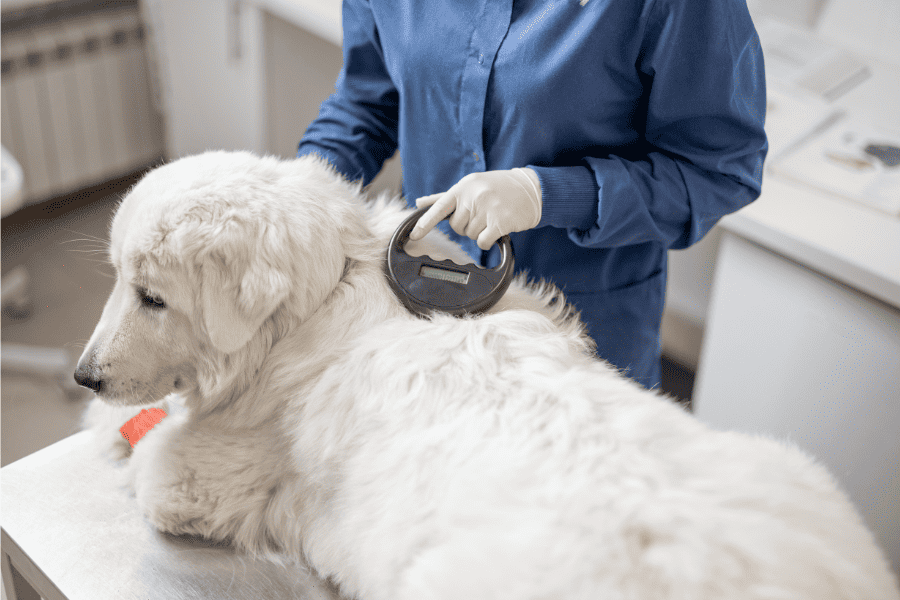
May is Microchip Awareness Month. This little chip, the size of a grain of rice, could be the difference between you getting your beloved pet returned home or having them lost to you forever. The American Humane Society https://www.americanhumane.org estimates that over 10 million dogs and cats are reported lost each year. You can increase the odds that your pet is returned to its loving home by microchipping them. Both dogs and cats should be chipped. And just because you have an indoor only cat doesn’t mean the worst couldn’t happen and the kitty gets out and lost.
What exactly is a microchip and what can it do for me and my pets?
It’s a tiny transponder, a radio-frequency identification (RFID) chip. Implanted between the pets’ shoulder blades, under the skin, using a needle-like injector, it remains in place forever. It contains your unique identification information that, when scanned by a veterinarian or shelter with a special scanning device, can provide an identification number that is linked back to your information. The cost of the chip varies, but is usually under $50. Some cities or vet clinics offer discounted microchip days, especially since May is Microchip Awareness Month, look out for those specials. Some companies charge a registration fee and there are several “universal” registry companies that also charge a fee. This type of “universal” registration ensures that of the many varied types of chips and readers available, and there are many, the information can be located through the registry company.
Does it hurt my pet?
Many pet parents have asked if the microchip implantation hurts or if the pet will feel it under their skin. Veterinarians have said that it feels very much like receiving a vaccination. The procedure is quick and DOES NOT require anesthesia or any sort of recovery time. Some vets encourage their patients (pet owner) to wait until a puppy or kitten has grown substantially before implantation as they worry the chip may “migrate” within the shoulder area. Other’s see no problem with chipping as early as possible. In fact, the newer generation chips have an anti-migrating property that guards against them moving about. All chips, both new and old generation, do not degrade over time ensuring your pet is protected for their lifetime.
Peace of mind.
If you pet is lost, contact your registration company immediately and provide them with the pet’s identification number. This will trigger regional email and text alerts to area veterinarians and rescue groups of a lost pet and to be on the lookout for them. And when your pet is returned home, please be sure to contact the registration again to let them know you have been reunited. They will then discontinue the alerts.
As a professional dog walker and pet sitter, I remind all my clients to be sure their contact information is up to date with the chip registry company. Lots of people who relocate don’t think about their contact information being outdated. If the registry company has invalid information, it’s almost like not having the microchip at all.
Check for a microchip.
Check the collar to see if there is a separate tag that identifies that they are microchipped. Some chip companies provide a separate tag to aid in identification. Regardless of whether there is a tag, take the lost pet to a veterinarian to be scanned for a chip. The vet will start by scanning the shoulder blade area and if a chip is not detected they should proceed to check the rest of the body, particularly under the sternum and around the armpits, just in case the chip has migrated to an unusual location. It should not cost you ANYTHING to have a lost pet scanned for a chip.
Most pet parents put collars on their pets with ID tags. This is great, and many times if you find a pet wandering in its own neighborhood and the ID tag is readable, you can reunite the pet with the owners quickly and avoid a trip to the vet to be scanned. But many collars can break, fall off or the information can be worn away over time, making it impossible to be read. A microchip is permanent and forever.
Stolen Pets.
A microchip can also help prove ownership in case your pet is stolen. It’s definitive proof of pet ownership if there is a dispute. Unfortunately, we hear lots of stories lately of pets being stolen and resold without the new owner being aware they have purchased a stolen pet. If this were to happen to you, your microchipped pet could prove that you are their rightful owner.
Several recent studies have shown that microchipped cats are returned to their owners’ 38.5 percent of the time, while non-chipped cats only 1.8 percent of the time. In dogs, 52.2 percent are returned home when they are microchipped versus non-chipped dogs returned home only 21.9 percent of the time. I certainly want every chance possible of getting my beloved fur-child back and therefore am a big proponent of microchipping.
Register the Chip.
A big barrier to recovery and reuniting is owners that do not register their pets with a registration company – 6 out of 10 pets are never registered. Many owners erroneously believe that once their pet is microchipped either through a shelter, breeder or their veterinarian that the process is over, that the pet is automatically registered with the company. That couldn’t be further from the truth. The next step is to contact the registry company and provide your contact information as well as your pets information. Some companies even ask for a photograph of the pet. I think that’s a great idea. Registration of the microchip is THE crucial step of the microchipping process and this step if often missed, whether through miscommunication, misunderstanding or something else. Your pet is not automatically registered just because they have been microchipped. It is YOUR duty to take this next step.
Each microchip company has their own registry data base and there are now several universal databases that you can register with as well. Most companies charge a one time or annual fee for registration. My dog is registered with AVID and they do not charge a fee for registration. Makena was adopted from a rescue and had been microchipped by a previous owner (he had 3 of them before us!) I contacted the chip company, and provided them with my contact information. I was prompted to do this by the rescue organization. I wrongfully assumed that the rescue would handle this paperwork. Nope, it’s the new owners responsibility.
I’ll state it again as it is vitally important, you must update your contact information if you move. There is no way for the registration company to locate you if your pet has been recovered if your information is out of date. Something as simple as changing your cell phone number should be reported to the company. Again, they can’t contact you without updated information. You should be able to simply call or email your the company to change your contact information. It’s a great time to take care of this during Microchip Awareness Month of May.
Many Chips Available
There are lots of microchip companies out there and therefore many different registries. If your pet happens to be chipped with an off-brand company, it is best to be safe and register with a universal registration company. AAHA (American Animal Hospital Association) https://www.aaha.org has a Universal Microchip Lookup Tool.
I have heard recently that some companies are improving their chips so that they operate the pet’s doggie doors so that only the pet with the chip can enter. This helps greatly in keeping unwelcome critters out of your home. Now that’s cool!!!
You can see how vitally important it is to microchip your pet. Yes, you can and should have a collar and ID tags on your pet, but a microchip is a more permanent way to ensure you furry family member is returned home to you, where he belongs.
Thank you.
0 Comments